JOURNAL
What to Look for When Buying an Apartment or a House: Decisions Worth Making Before You Start Viewing Properties
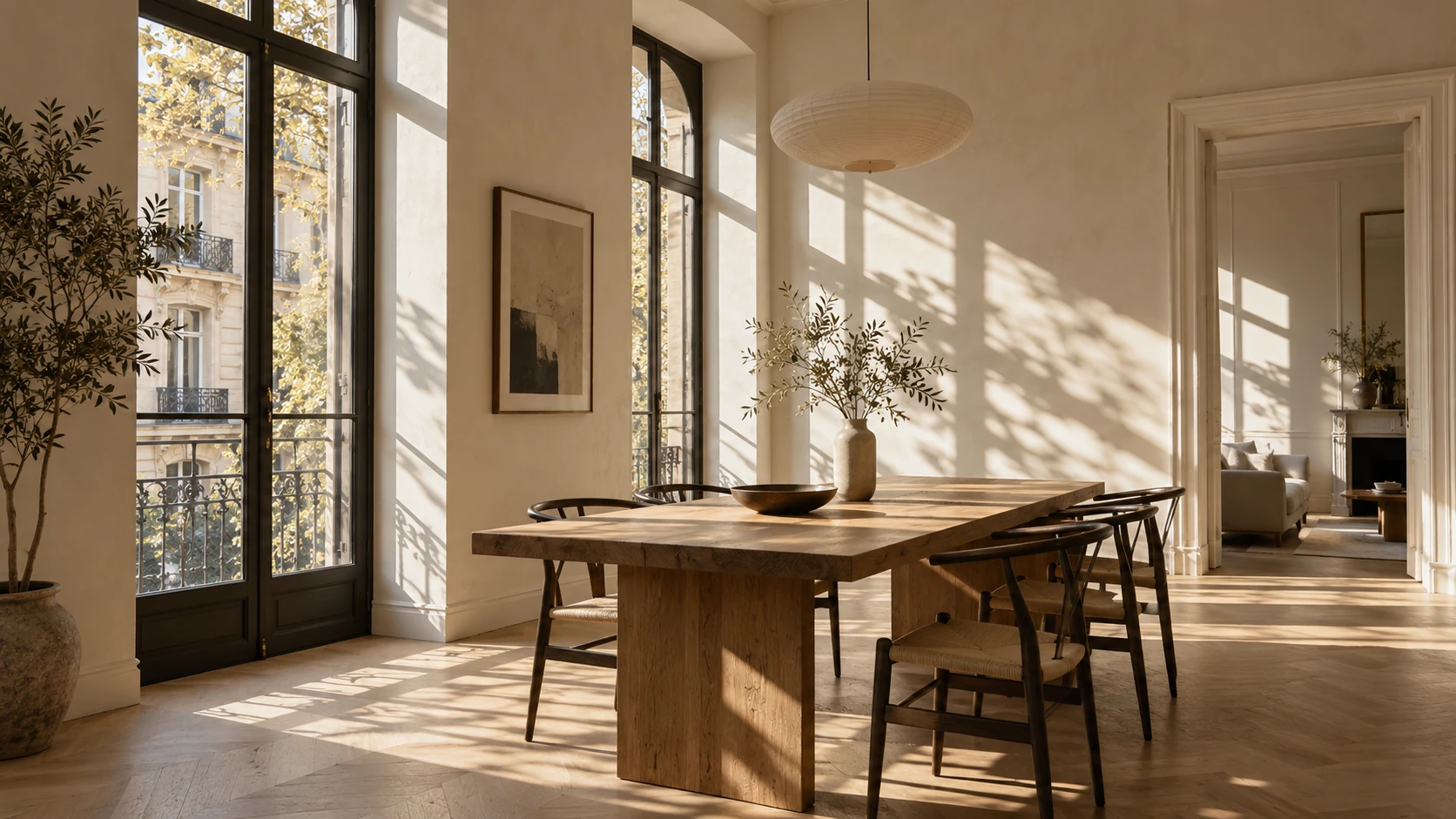
A property search often begins with browsing listings. We decide on the location, size, number of rooms and maximum price, and then see what the market has to offer.
Yet many of the most important decisions are worth making much earlier.
Before specific addresses, beautiful photographs and first impressions come into play, it helps to answer a few questions not so much about the property itself, but about the life that is meant to happen there. Those answers make it much easier to judge whether an attractive listing is genuinely a good fit.
So what should you consider before buying an apartment or a house — before you even start arranging viewings?
1. Start by asking yourself: why are you buying this property?
It may sound like an obvious question. In practice, the answer is often more complex.
You choose differently when looking for a family home for the next fifteen years, an apartment for a child going to university, or a property that may eventually be rented out or sold.
So instead of beginning with:
“What kind of apartment am I looking for?”
start with:
“What role should this property play in my life?”
Is it intended to be a long-term home or a temporary one? Is its main purpose to provide comfort, preserve capital, generate income — or perhaps combine several of these functions?
The more clearly you define the purpose of the purchase, the easier it becomes to distinguish a property that genuinely suits you from one that simply looks appealing in a listing.
2. Location is about more than the address
When buying an apartment or a house, location is one of the most important criteria. But it should not be judged solely by the name of the neighbourhood or the prestige of a particular address.
What matters far more is how that location will work in everyday life.
The commute to work or school, access to public transport, everyday shopping, green spaces, noise, traffic, the immediate surroundings and the time required to reach places you use regularly all make a difference.
With a house, the list becomes even longer. You may also need to consider access to infrastructure, the quality of the access road, distance from the city and how the area functions outside weekends.
It is useful to imagine not the day of the viewing, but an ordinary Tuesday several years after the purchase.
What will the morning look like? How long will the school run take? Can you walk to buy everyday essentials? How long will the journey home take during rush hour?
These questions often tell you more about the true value of a location than the street name alone.
3. Define the real budget, not just the purchase price
One of the most common mistakes when choosing a property is treating the asking price as the entire budget.
In reality, the cost of buying an apartment or a house does not end with the transaction price.
Depending on the property, you may also need to account for transaction costs, financing, renovation or finishing works, furniture, moving expenses and, later, the ongoing costs of ownership.
An apartment requiring a complete renovation may initially appear significantly cheaper than one that is ready to move into. Once all costs are taken into account, however, the difference may be much smaller than expected.
The same applies to houses. More space and an attractive price per square metre do not necessarily make a property a better purchase if it requires substantial investment or comes with high running costs.
Instead of asking only:
“How much can I pay for the property?”
it is worth asking:
“What total budget am I willing to allocate to bringing this property to the standard I actually need?”
That is a very different perspective.
4. Separate what can be changed from what cannot
Wall colours can be changed. So can the kitchen.
The view, orientation, floor level, position of the building or distance from a busy road usually cannot.
During a viewing, it is easy to be impressed by an interior that has been carefully prepared for sale. Equally, it is easy to reject a property simply because the current decor is completely different from your own taste.
It helps to separate two things:
the property itself and its current interior design.
Many elements of an interior can be improved. The more important features are those that will remain with you regardless of how much you later spend on renovation.
When buying an apartment, it is worth paying attention to the layout, proportions of the rooms, potential for functional changes, natural light, views and surroundings.
When buying a house, you should also consider the plot, its position and orientation, the shape of the building, the relationship between the house and garden, and the potential for future alterations.
A good interior can be created. A good location or the fundamental parameters of a building are far harder to change.
5. Think about function, not just square metres
More space does not always mean more comfort.
A smaller, well-designed apartment can work far better than a larger property filled with long corridors, awkward unused areas and poorly proportioned rooms.
Rather than focusing only on size, consider what you can actually do with the space.
Is there enough storage? Will the dining table fit where you really want it? Can you create a comfortable workspace? Does the layout provide enough privacy for household members? Will a child’s room still work well several years from now?
With a house, there are further questions to ask. Will the larger floor area actually be used? Are the different zones well connected? Does the house support the way its residents live, or will daily life have to keep adapting to the architecture?
Square metres are a number. Functionality determines how the space will feel every single day.
6. Think beyond today’s needs
A property is usually a much longer-term decision than a car, furniture or most other major purchases.
That is why it is worth looking beyond your current situation and considering how your needs may change over the next few years.
Could your family grow? Are your children likely to move out soon? Will part of your work be done from home? Could a lift, single-level living or proximity to public transport become more important in the future?
This is not about trying to predict your entire life.
It is about checking whether the property offers enough flexibility not to become inconvenient after the first major change in circumstances.
Sometimes that flexibility is worth more than a few additional square metres.
7. Consider the property’s value from a future perspective
Even if you are buying an apartment or a house purely for yourself, it is worth looking at it for a moment through the eyes of a future owner.
Life changes. A property bought today as a long-term home may one day enter the rental or resale market.
So it is useful to ask:
Will the qualities I see in this property also be clear to someone else?
A good location, functional layout, access to infrastructure, natural light, parking and attractive surroundings matter not only on the day of purchase. They may also influence future demand for the property.
That does not mean every home should be chosen as if it were an investment.
Your own property should first and foremost work for you.
It is simply useful to understand which elements of your choice are highly personal and which may also support long-term value.
8. Decide where you are willing to compromise
The perfect property often does not exist.
One apartment may have an excellent location but be slightly too small. Another may offer the ideal layout but be further from the city centre. A house may have a beautiful plot but require extensive renovation.
The compromise itself is not the problem.
The problem arises when we have not decided in advance where we are willing to make one.
Before you begin your search, it is useful to divide your criteria into three groups:
- must-haves — without them, the purchase does not make sense,
- nice-to-haves — important, but possible to give up in exchange for other advantages,
- deal-breakers — features you are not willing to accept regardless of the property’s other strengths.
This simple exercise can be extremely helpful when the first genuinely attractive property appears.
The emotions will still be there, but they do not have to take control of the decision.
9. Do not let first impressions replace analysis
Property purchases are emotional as well — and there is nothing wrong with that.
A home should create a positive feeling. The problem begins only when the first impression starts to overshadow everything else.
Beautiful afternoon light, a striking interior, a large terrace or an exceptional view can make us start justifying features we had previously decided we would not accept.
That is why it is useful to write down your own criteria before you see the property you suddenly really want to buy.
It is one of the simplest ways to maintain perspective.
10. Only then start viewing properties
A well-prepared property purchase does not begin with finding the perfect listing.
It begins with understanding your own needs.
Once you know the purpose of the purchase, your real budget, your priorities, your limits on compromise and the perspective of the next few years, the market starts to look very different.
You stop asking only:
“Do I like this apartment?”
and start asking:
“Does this property genuinely match what I need?”
It is a small shift in thinking, but one that can have a significant impact on the quality of one of the most important financial and lifestyle decisions you make.
Because when buying an apartment or a house, the most important thing is not necessarily to find the property that creates the strongest first impression.
It is far more important to find one that fits the owner’s life, plans and financial reality — even after the initial excitement of the purchase has passed.
MILQA JOURNAL